Free U.S. Shipping on Orders $200+ Faith Filled Products to Help Build Your Own Church in Miniature
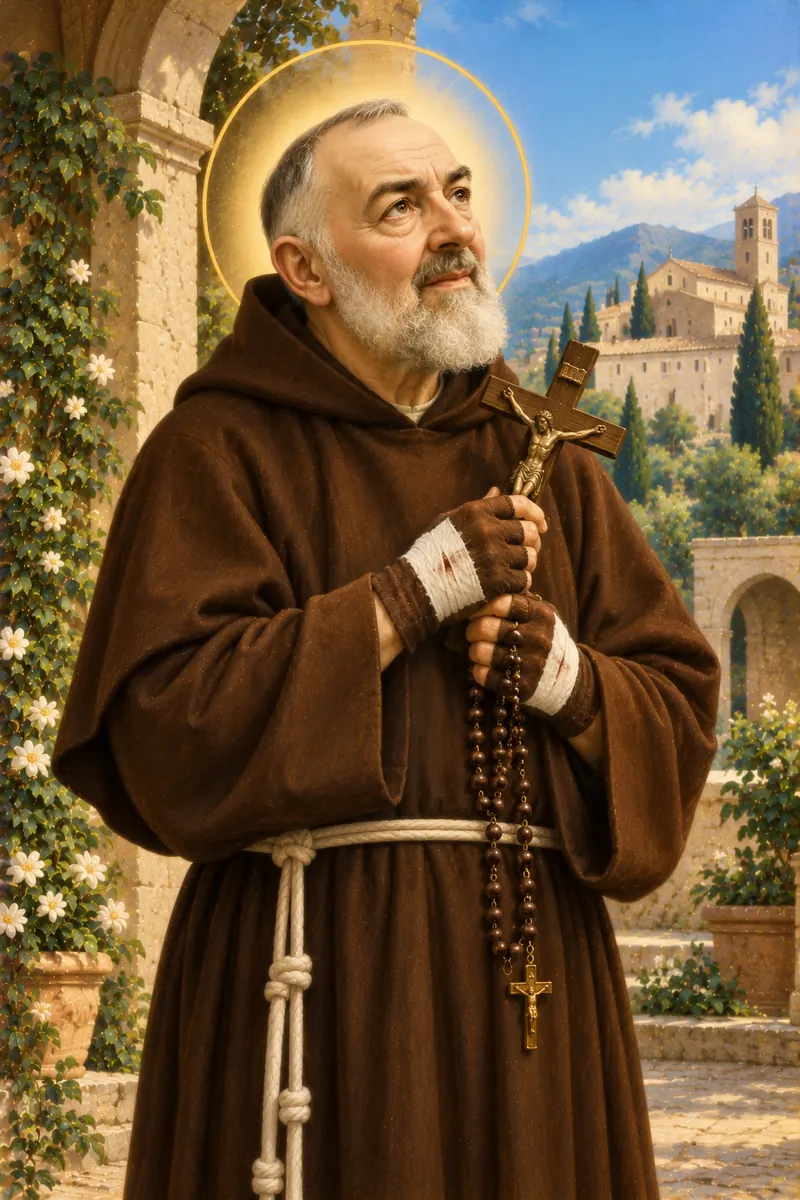
Saint Pio of Pietrelcina
May 25, 1887 – September 23, 1968
Saint Pio of Pietrelcina, affectionately known as Padre Pio, was an Italian Capuchin priest renowned for his extraordinary devotion to the Holy Mass, the Sacrament of Penance, and the suffering of Jesus Christ. Bearing the stigmaa for fifty years, he inspired countless Catholics to embrace prayer, repentance, sacrifice, and unwavering trust in Divine Providence.
Feast Day
September 23
Where From
Pietrelcina, Benevento, Italy
Vocation
Capuchin Franciscan friar, Catholic priest, and spiritual director
Patron of
Civil defense volunteers; also invoked by the sick and suffering
About Saint Pio of Pietrelcina
Born Francesco Forgione on May 25, 1887, in Pietrelcina, Italy, Saint Pio of Pietrelcina demonstrated a deep love for Our Lord and the Blessed Virgin Mary from childhood. He entered the Capuchin Franciscan Order in 1903, taking the religious name Pio, and was ordained to the priesthood in 1910. Throughout his religious life, Padre Pio became known for his reverent celebration of the Holy Sacrifice of the Mass, his lengthy hours hearing confessions, and his profound devotion to the Holy Rosary. In 1918, he received the visible stigmata, wounds corresponding to those suffered by Our Lord during His Crucifixion, which remained with him for approximately fifty years. Despite widespread attention, physical suffering, and restrictions imposed by Church authorities, he sought to remain humble and obedient, faithfully dedicating himself to the salvation of souls.
Saint Pio spent most of his priestly ministry in San Giovanni Rotondo, where thousands of pilgrims sought his spiritual direction and prayers. He encouraged frequent confession, worthy reception of Holy Communion, perseverance in prayer, and complete confidence in God’s mercy. His compassion for the suffering also inspired the establishment of the Casa Sollievo della Sofferenza, a hospital dedicated to caring for the sick. Padre Pio died on September 23, 1968, at the age of eighty-one and was canonized in 2002. His extraordinary example reminds Catholic families that holiness grows through prayer, faithful participation in the Sacraments, patient acceptance of suffering, and a deep love for Jesus Christ crucified.